

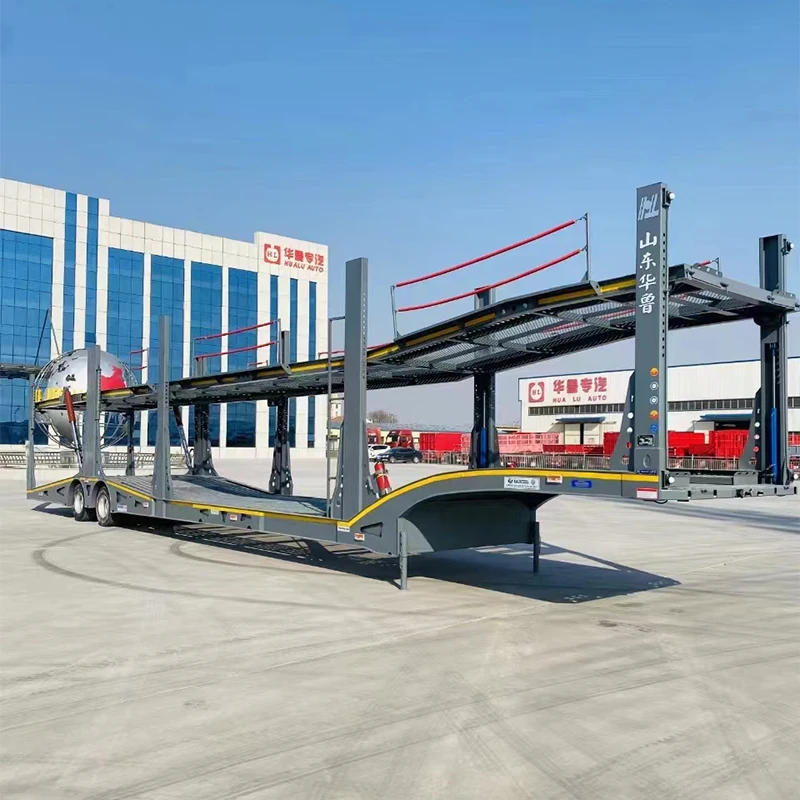
First, master the correct pre-departure inspection and loading steps to avoid 80% of common in-transit problems. Before you drive onto any road, walk around the full trailer to check every tie-down point, make sure no straps are frayed or loose, and confirm all hydraulic locking pins for the upper deck are fully clicked into place. Many operators skip this quick 5-minute check, only to find the upper deck shifts slightly halfway through a long trip, leading to scratched vehicles or even dangerous instability on the highway. When loading vehicles, always place the heaviest units on the lower deck first, and distribute weight evenly across the full length of the trailer, never stack all heavy SUVs on one end that puts uneven stress on the chassis frame. When driving vehicles onto the loading ramp, make sure the ramp is fully locked on both ends, and never rush the process — sudden acceleration can make a car bump into the trailer’s front guardrail, causing expensive paint damage that you will have to compensate for. After all vehicles are secured, double check that no side mirrors or antennas stick out past the trailer’s side frame, to avoid scrapes when you pass narrow urban streets or tight highway lanes.
During transit, small smart driving habits will save you from huge avoidable repair bills. When you are driving with a full loaded trailer, slow down well in advance before hitting speed bumps, potholes or uneven unpaved road sections. Sudden hard impacts can bend the loading deck frame or knock vehicles out of their tie-down positions, issues that often go unnoticed until you arrive at the delivery site. When taking sharp turns, reduce your speed more than you would with a regular cargo trailer — the extra height of the two-level deck makes the center of gravity higher, and fast sharp turns can lead to dangerous swaying that risks rollover. On long downhill sections, use steady consistent braking instead of slamming on the brakes repeatedly, which will wear out the brake pads far faster and can cause brake fade that puts your whole load at risk. If you are driving through heavy rain or muddy roads, avoid stopping on soft sloped ground, the uneven surface can twist the trailer chassis over time and cause permanent structural damage.
Routine scheduled maintenance, done the right way, will double the service life of your car carrier semi trailer and cut long-term operating costs drastically. Every 2 weeks, do a full check on all hydraulic system components: wipe clean the hydraulic cylinder rods to remove accumulated road dust, and check the hydraulic oil level to make sure it stays at the marked safe line. Dirty hydraulic oil is the top cause of slow lifting or stuck upper decks, a problem that often leaves fleets stranded far from repair shops. Every month, tighten all bolts on the main frame, deck platforms and suspension parts — constant vibration on rough roads can loosen these small parts over time, and a missing bolt on the suspension can lead to a full axle failure mid-trip. Every 3 months, inspect all rubber padding on the loading decks, replace any worn or torn sections immediately, so exposed metal will not scratch the undercarriage of transported vehicles. At the same time, grease all moving joints on the ramps and lifting arms, to keep the operation smooth and avoid unnecessary metal wear.
We have designed all our car carrier semi trailers to make these daily maintenance steps as easy as possible for your team. All key inspection points are placed in easy-to-reach positions, no need to climb under the trailer for hours just to check a simple oil level. All common replacement parts follow universal standard sizes that you can source locally in most regions, so you never have to wait weeks for special imported parts when you need to do a quick repair. Following these simple operation and maintenance rules will help you cut unexpected downtime by more than 60%, eliminate almost all accidental vehicle damage claims, and get far higher long-term returns on your trailer investment.