

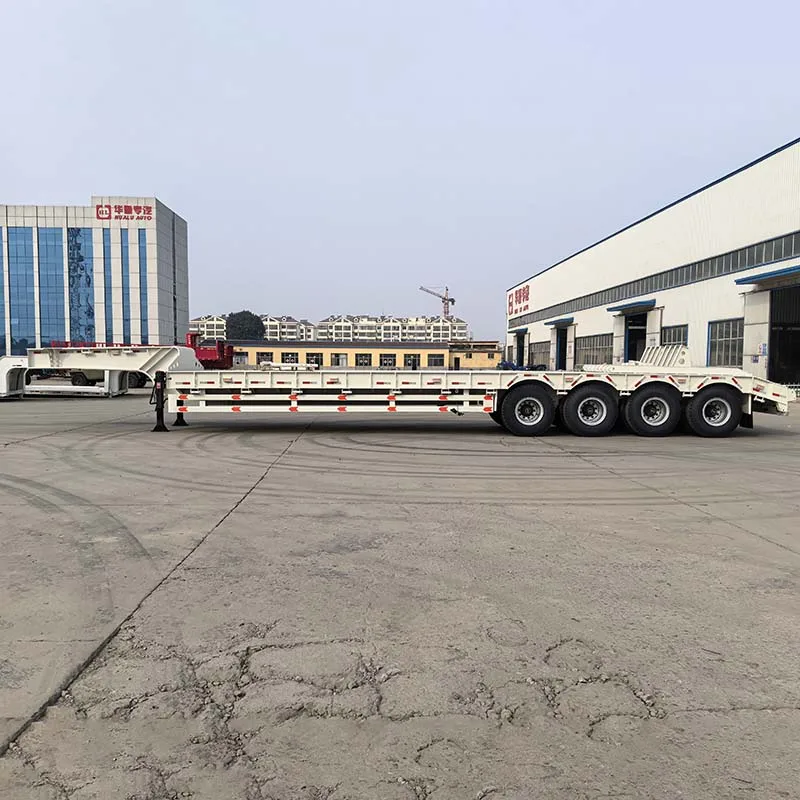
In northern Chile, where mining operations stretch across the Atacama Desert and cargo routes climb through steep, uneven mountain roads, heavy machinery transport is a daily challenge. A regional transport operator running excavators, bulldozers, and oversized mining equipment faced the same problem many fleets know well: every job demanded multiple trips, careful route planning, and long driver hours, capping how many contracts the company could accept each month. The fleet was working hard but earning less than it should. That changed after the company added the Hualu 4-Axle Lowbed Semi-Trailer to its operation.
1. Faster, Safer Loading for Heavy Machinery
The first improvement was visible on day one. The lowbed design lowered the loading deck, so excavators and bulldozers could be driven on with far less ramp angle and far less risk. What used to take a crew significant time and caution now moved quickly and predictably. Drivers reported feeling more confident during loading, and the risk of equipment damage or injury dropped noticeably. For a business moving expensive mining machinery every week, that safety gain alone translated directly into lower insurance exposure and fewer costly delays.
2. Stable Handling on Steep and Uneven Ground
Northern Chile's terrain is unforgiving — steep grades, loose gravel, and uneven surfaces are routine. The four-axle configuration gave the trailer the stability needed to handle these conditions with confidence. Load distribution improved, sway decreased, and the trailer tracked steadily even on challenging routes. Operators no longer had to avoid certain roads or wait for ideal conditions. This reliability meant schedules held firm, and the company could commit to delivery windows it previously would have considered too risky.
3. More Payload per Trip, Lower Operating Costs
The trailer's payload capacity allowed larger machines to be transported in a single run instead of being split across multiple trips. Fewer journeys meant less fuel burned, fewer driver hours logged, and less wear on the tractor units. On long desert routes where fuel and labor dominate operating costs, this efficiency added up quickly. Each job that once required two or three movements now needed only one, and the savings flowed straight to the bottom line.
4. More Jobs per Week with the Same Fleet
Within months, the impact on productivity became clear. The operator was completing more jobs per week without adding a single vehicle to the fleet. Faster turnaround meant equipment returned sooner and was ready for the next contract. The company could accept opportunities it previously had to decline, and dispatch planning became simpler and more flexible. Same fleet, more revenue — a combination every transport manager understands.
5. Repeat Business, Referrals, and Stronger Profits
Reliable delivery changed how clients saw the company. Mining contractors appreciated equipment arriving on schedule and in good condition, and that trust turned into repeat contracts and word-of-mouth referrals. The result was clear: by moving machinery more efficiently, the company increased its profit margin without expanding its fleet. For transport businesses in Chile, the Hualu 4-Axle Lowbed Semi-Trailer delivers exactly what matters — more loads, lower costs, and stronger profits.